Blog details
2026-08-21
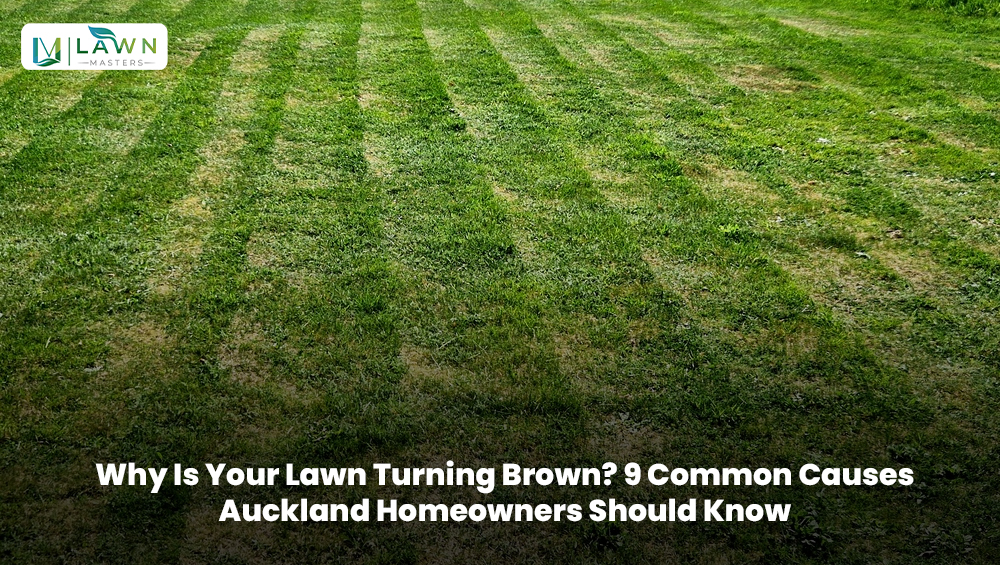
Why Is Your Lawn Turning Brown? 9 Common Causes Auckland Homeowners Should Know
Seeing brown grass across an otherwise healthy lawn can be frustrating. One week it looks green and fresh, and the next you notice yellow patches, dry blades or entire sections losing their colour.
The good news is that brown grass does not automatically mean your lawn is dying. In Auckland, changing weather, watering habits, mowing practices, soil conditions and pests can all affect how grass looks.
Before reaching for fertilizer or watering the lawn every day, it is worth finding out why the grass is turning brown in the first place.
This guide explains nine common causes Auckland homeowners should know, along with practical ways to help your lawn recover.
1. Lack of Water
One of the first things to check when grass starts turning brown is moisture.
During warm or unusually dry periods, grass can lose water faster than the soil can replace it. The blades may become dull, curl slightly or develop a yellow-brown appearance.
A lawn does not always need daily watering. In fact, shallow and frequent watering can encourage weaker roots because moisture remains close to the surface.
Instead, focus on watering thoroughly when the soil actually needs it. Early morning is generally a better time than the hottest part of the day because less water is lost through evaporation.
A simple test is to walk across the lawn. If footprints remain visible for a while instead of quickly disappearing, the grass may be under moisture stress.
2. Too Much Water
It sounds strange, but excessive watering can also contribute to brown grass.
When soil stays constantly wet, roots may struggle to access enough oxygen. Poor drainage can make the problem even worse, particularly in areas where water collects after rain.
Overwatering can also create conditions that favour certain lawn diseases and weaken the root system.
Instead of following a fixed watering routine, look at the lawn and soil first. Check whether water is draining properly and whether the ground is still damp below the surface.
If one section repeatedly turns brown while another stays green, drainage or soil differences may be worth investigating.
3. Cutting the Grass Too Short
A freshly cut lawn can look fantastic, but cutting too much at once can leave grass stressed and vulnerable.
Grass blades are not simply decorative. They capture sunlight and help the plant produce energy. Removing a large portion of the blade reduces that capacity and exposes the soil to more sunlight.
This becomes particularly noticeable during warm or dry weather.
A useful rule is to avoid removing more than about one-third of the grass height in a single cut. Keeping the lawn slightly taller during stressful weather can also provide better protection for the soil and roots.
If the lawn has become seriously overgrown, avoid trying to achieve the final height in one mowing session. Gradual cutting is usually kinder to the grass.
4. Mowing With Dull Blades
Your mower can be running perfectly and still leave the lawn looking brown.
The problem may be the blades.
Sharp mower blades produce cleaner cuts, while blunt blades can tear and damage the tips of grass. Those damaged ends can develop a brown or straw-like appearance.
Look closely at the lawn after mowing. If the tips appear shredded rather than neatly cut, your mower blades may need attention.
Keeping equipment maintained is a small task that can make a surprisingly noticeable difference to the appearance of the lawn.
It is also worth checking the mower deck and making sure grass does not build up underneath it, particularly when mowing damp conditions.
5. Heat and Weather Stress
Auckland's weather can change quickly, and grass responds to those changes.
Extended periods of heat, dry conditions, strong sunlight or sudden weather shifts can place stress on the lawn. Some grass types naturally slow their growth during difficult conditions, meaning the lawn may lose some of its bright green colour.
That does not necessarily mean the grass is permanently damaged.
The important thing is to avoid adding additional stress. Do not scalp the lawn, avoid unnecessary mowing during extreme conditions and monitor soil moisture.
If the grass is still rooted and the crowns remain healthy, recovery may occur once conditions become more favourable.
6. Poor Soil Conditions
Sometimes the problem is underneath the grass rather than on top of it.
Compacted or poor-quality soil can restrict roots from accessing air, water and nutrients. If the lawn has been established for years without any soil improvement, this can gradually become more noticeable.
Watch for areas where:
- Water sits on the surface after rain
- Grass grows slowly
- Bare patches keep returning
- The soil feels unusually hard
- Different parts of the lawn have noticeably different colour
Soil problems can be more difficult to identify because the visible symptom is often simply brown or thin grass.
Improving drainage, relieving compaction and addressing the underlying soil condition can be more effective than repeatedly treating the grass itself.
7. Lawn Pests
Brown patches can sometimes indicate unwanted insects or other lawn pests.
Certain pests feed around grass roots, reducing the plant's ability to absorb water and nutrients. As the roots become damaged, sections of lawn may gradually lose colour.
Look for additional clues such as loose turf, thinning grass, disturbed soil or birds repeatedly feeding in one particular area.
Do not automatically apply pest treatment simply because you see brown grass. The cause could be watering, mowing, soil or disease instead.
Correct identification should come before treatment.
8. Fungal Problems and Disease
Brown patches can also develop when lawn conditions favour fungal activity.
Excess moisture, poor airflow, prolonged dampness and stressed grass can all contribute to lawn disease. The appearance can vary considerably depending on the grass type and the particular problem.
You may notice:
- Circular or irregular brown patches
- Discoloured grass blades
- Fine fungal growth
- Rapidly expanding damaged areas
- A lawn that stays damp for long periods
If the pattern continues despite sensible watering and mowing practices, it is worth investigating further rather than simply adding more water or fertilizer.
Good mowing habits, appropriate watering and proper airflow can all support healthier grass.
9. Heavy Foot Traffic and Compaction
Your lawn may be working harder than you realise.
Children playing, pets running across the same area, outdoor furniture and regular foot traffic can gradually compact the soil.
When soil becomes compacted, grass roots have less room to grow and water may struggle to move through the soil properly. The result can be thin, weak or brown-looking grass.
You may notice this especially around pathways, gates, clotheslines, entrances and frequently used outdoor areas.
If the same patch keeps deteriorating while less-used sections remain healthy, foot traffic could be part of the answer.
How to Bring Brown Grass Back
The first step is diagnosis.
Do not immediately assume that brown grass needs more water. Walk around the property and look for patterns.
Ask yourself:
- Is the entire lawn brown or only certain sections?
- Has the weather recently been unusually dry or hot?
- Does water drain properly?
- Was the grass recently cut very short?
- Does the mower leave shredded tips?
- Are there signs of pests?
- Is the soil hard or compacted?
- Does the damaged area receive heavy foot traffic?
Once you identify the likely cause, make one change at a time and monitor the lawn.
Healthy recovery is usually a process rather than an overnight transformation.
For regular mowing, the correct cutting height and frequency also matter. Auckland lawns can grow quickly during favourable conditions, so allowing grass to become extremely long and then cutting it aggressively can create unnecessary stress.
Regular maintenance helps prevent that cycle and keeps the lawn easier to manage. Lawn Masters currently provides regular and one-off mowing options across Auckland, with services based around the condition and size of the property.
When Should You Call a Professional?
If brown patches continue to spread, return repeatedly or appear without an obvious cause, getting professional eyes on the lawn can save time and prevent the wrong treatment.
This is particularly useful when several issues may be happening at once, such as poor drainage combined with compacted soil or incorrect mowing.
For homeowners who do not have the time to maintain their outdoor space consistently, professional maintenance can also take the pressure off.
In Eden Terrace, Professional Lawn Mowing Experts in Eden Terrace can help homeowners maintain a cleaner, healthier-looking outdoor space through regular mowing and related maintenance.
The goal should not simply be a lawn that looks good immediately after mowing. Consistent maintenance should support healthy growth throughout the year.
Frequently Asked Questions
1 Why is my lawn turning brown even though I water it?
Overwatering can be just as problematic as underwatering. Poor drainage, compacted soil or excessive moisture can weaken roots and contribute to discolouration.
2 Should I water brown grass every day?
Not necessarily. Check the soil moisture first. Watering too frequently can encourage shallow roots and may create overly wet conditions.
3 Can mowing cause brown grass?
Yes. Cutting grass too short or using blunt mower blades can stress or damage the grass. Avoid removing more than one-third of the blade height in one mowing session.
4 Will brown grass become green again?
It depends on the cause. Grass stressed by temporary heat, lack of moisture or incorrect mowing may recover when conditions improve. Severe root damage, disease or pest problems may require additional treatment.
5 How often should I mow an Auckland lawn?
There is no single schedule for every property. Growth rate, grass type, weather and lawn condition all matter. During active growth, more frequent mowing with smaller cuts is generally preferable to allowing the grass to become excessively long.
Final Thoughts
Brown grass is your lawn's way of telling you that something has changed.
The solution is not always another watering session or a bag of fertiliser. Sometimes the real problem is mowing too short. Sometimes it is compacted soil, poor drainage, pests or simply weather stress.
Start by identifying the pattern, check the soil and review your recent mowing and watering habits. Once you understand the cause, you can take the right steps instead of treating the symptom blindly.
A greener lawn is usually the result of consistent, sensible maintenance, not one quick fix.
If keeping your Auckland lawn healthy and presentable is becoming difficult to fit into your routine, Lawn Masters provides professional mowing and outdoor maintenance services for residential and commercial properties across Auckland.
