Blog details
2026-08-17
Weed Control in Hamilton: 9 Common Lawn Weeds and How to Get Rid of Them
A healthy lawn can transform the look of your Hamilton property, but weeds can quickly turn thick, green grass into a patchy and untidy outdoor space. From clover and dandelions to oxalis and prickly lawn weeds, unwanted plants compete with grass for water, nutrients, sunlight and growing space.
For Hamilton homeowners, effective weed control is not simply about spraying a weed killer whenever something appears. The right approach starts with identifying the weed, understanding why it is growing and choosing a treatment suitable for your lawn type.
If you're searching for lawn weeds Hamilton, weed removal Hamilton, or professional lawn weed treatment, this guide explains nine common weeds and practical ways to manage them.
Why Weed Control Matters in Hamilton
Hamilton's changing weather can encourage strong lawn growth, but the same conditions can also support unwanted plants. Regular rainfall, seasonal temperature changes and weak or thinning turf can create opportunities for weeds to establish.
Weeds are particularly problematic when the lawn is already stressed. Thin grass leaves more exposed soil, giving weed seeds somewhere to germinate.
Effective weed control can help:
- Keep your lawn looking thicker and greener
- Reduce competition for nutrients and water
- Prevent weeds from producing more seeds
- Improve the appearance of your property
- Reduce the amount of manual weeding required
- Support healthier long-term grass growth
A key principle is simple: a strong, dense lawn is one of your best defences against weeds.
9 Common Lawn Weeds in Hamilton
Not every weed should be treated in exactly the same way. Identification matters because different weeds have different growth habits and may require different control methods.
1. White Clover
White clover is one of the most recognisable lawn weeds. It has small three-part leaves and creeping stems that allow it to spread across thin areas of turf.
It is commonly associated with lawns where grass is weak or soil conditions are less favourable.
How to control white clover
Small patches can sometimes be removed manually. For larger infestations, a suitable selective lawn treatment may be more effective.
Improving lawn density through appropriate mowing, fertilising and watering can also make it harder for clover to dominate.
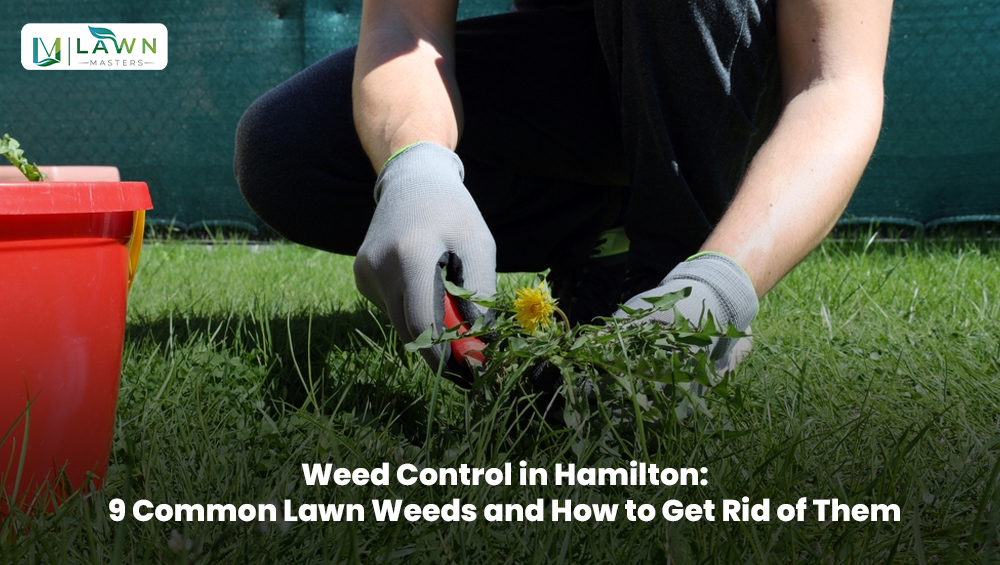
2. Dandelion
Dandelions are easy to identify because of their bright yellow flowers and distinctive leaves. The problem is that removing only the visible portion may not solve the issue.
Their strong root system can allow them to return if the root is left behind.
How to remove dandelions
For isolated weeds, carefully dig around the plant and remove as much of the root as possible. Larger infestations may require targeted lawn weed treatment.
Avoid allowing mature flowers to produce seeds, as this can spread the problem across your lawn.
3. Oxalis
Oxalis can easily be mistaken for clover because of its small, three-part leaves. Look closely and you'll often notice its yellow flowers.
This spreading weed can become difficult to manage once established because it can form dense patches.
How to control oxalis
Hand removal may work for small areas, but established oxalis can require repeated targeted treatment.
Always choose a treatment that is appropriate for your specific lawn and follow the product label carefully.
4. Plantain
Plantain is a broadleaf weed that often appears as a low-growing rosette. It can tolerate compacted conditions and may become noticeable in lawns that receive heavy foot traffic.
How to get rid of plantain
Small plants can be dug out carefully, making an effort to remove the root. If plantain is widespread, professional assessment and targeted treatment may provide a more practical solution.
Improving soil and turf health can also reduce the conditions that allow plantain to thrive.
5. Thistles
Thistles are particularly unpleasant because of their prickly leaves and stems. They can also become difficult to handle once they are well established.
Thistle removal
Wear appropriate gloves and protective clothing when manually removing thistles. Try to remove the root system rather than simply cutting the plant at ground level.
For larger areas, professional weed treatment can be safer and more efficient.
6. Bindii / Onehunga Weed
Prickly lawn weeds are a major concern because they can make walking barefoot across the lawn uncomfortable.
Bindii, commonly associated with prickly burrs, is particularly important to control before it reaches the seed-producing stage. New Zealand lawn guidance recommends identifying and treating it early rather than waiting until prickles have developed.
How to control prickly lawn weeds
Timing is important. Early identification and appropriate treatment can prevent the weed from developing mature burrs.
Regular lawn inspections during the cooler months can help Hamilton homeowners spot developing infestations before they become a bigger problem.
7. Winter Grass
Winter grass, or Poa annua, is a fine-textured grassy weed that commonly appears during cooler conditions. It can stand out because of its lighter green colour and small seed heads.
How to manage winter grass
Management depends heavily on your lawn variety and the extent of the infestation. Maintaining dense turf and addressing bare or weak areas can help reduce opportunities for winter grass to establish.
Pre-emergent strategies may also be useful in suitable situations, but product selection and timing matter.
8. Capeweed
Capeweed produces broad leaves and yellow flowers and can spread across lawns and other areas of the garden.
It becomes particularly noticeable when it starts competing with surrounding grass.
How to remove capeweed
Small infestations can be manually removed before they flower and seed. Larger infestations may require a suitable selective treatment.
After removing capeweed, repairing thin areas of turf is important so that new weeds do not simply occupy the empty space.
9. Creeping Buttercup
Creeping buttercups can spread through lawns using creeping stems. It tends to be more troublesome in damp or poorly drained areas.
How to control creeping buttercup
Start by improving the conditions that favour it. Check drainage, avoid excessive watering and maintain healthy grass coverage.
Where the infestation is established, targeted weed treatment may be required.
How to Get Rid of Lawn Weeds
There is no single solution for every weed. Effective weed removal in Hamilton usually combines identification, treatment and ongoing lawn maintenance.
1. Identify the Weed First
Before reaching for a weed killer, determine what you're dealing with.
Different weeds respond differently to treatment, and some products may damage particular grass varieties.
2. Remove Small Infestations Manually
If there are only a few weeds, hand removal can be a simple solution.
Dig carefully and try to remove the root, especially with weeds such as dandelions.
3. Use the Right Lawn Treatment
Selective weed control products can target certain broadleaf weeds while being designed to minimise damage to established turf.
However, always check the label for:
- Suitable grass types
- Application rates
- Weather conditions
- Safety instructions
- Re-entry requirements
- Any restrictions around pets or children
Bunnings New Zealand also recommends identifying the weed before selecting a treatment and distinguishes between pre-emergent and selective weed-control approaches.
4. Keep Your Lawn Dense
A thick lawn leaves fewer gaps for weeds to occupy.
Regular mowing, appropriate fertilisation and good watering practices all contribute to stronger turf.
5. Repair Bare Patches
Bare soil is essentially an open invitation for weeds.
After removing a significant weed infestation, consider repairing thin areas with an appropriate lawn renovation approach.
Why Do Weeds Keep Coming Back?
If you remove weeds but they repeatedly return, there may be an underlying lawn problem.
Common causes include:
Weak Grass
Thin turf allows sunlight to reach exposed soil, encouraging new weeds.
Incorrect Mowing
Cutting grass too short can stress the lawn and reduce its ability to compete with weeds.
Poor Soil Conditions
Compacted or nutrient-deficient soil can contribute to weak grass growth.
Excess Moisture
Poor drainage can create favourable conditions for certain weeds.
Existing Weed Seeds
Some weeds produce large numbers of seeds that can remain in the soil and germinate later.
This is why successful lawn weed treatment should focus on both the weeds and the condition of the lawn itself.
When Is the Best Time for Weed Control in Hamilton?
Timing depends on the weed, lawn variety and treatment being used.
However, late winter and early spring are particularly important periods to inspect your lawn because many seasonal weeds become more active as conditions change.
Lawn Masters' own Hamilton lawn-care guidance highlights August as an important period for preparing lawns for spring growth and recommends proactive weed management as temperatures begin to rise.
A useful seasonal approach is:
Late winter:
Inspect for emerging weeds and address problems early.
Spring:
Monitor actively growing weeds and maintain lawn density.
Summer:
Keep grass healthy and avoid unnecessary lawn stress.
Autumn:
Repair thin areas and prepare turf for cooler conditions.
Winter:
Continue monitoring for cool-season weeds and avoid neglecting the lawn entirely.
DIY Weed Removal vs Professional Weed Control
DIY weed removal can make sense when you have a few isolated weeds.
But professional help may be worthwhile when:
- Weeds cover a large part of the lawn
- The same weeds keep returning
- You cannot identify the weed
- Your lawn is already thin or damaged
- You are unsure which treatment is safe for your grass
- You don't have the equipment or time
- You want an ongoing lawn-care plan
Professional lawn care can combine weed management with mowing, fertilising, seasonal treatments and other maintenance rather than treating weeds as an isolated problem.
Lawn Masters provides Hamilton lawn care that includes mowing, fertilising, weed control, seasonal maintenance and other garden services.
How to Prevent Weeds from Taking Over Your Lawn
The best weed problem is the one you prevent.
Mow Correctly
Avoid repeatedly cutting the lawn too short. Follow the recommended mowing height for your grass variety.
Don't Ignore Thin Areas
Patchy turf creates space for weeds. Repair weak areas before they become heavily infested.
Water Appropriately
Watering should support healthy grass without creating persistently wet conditions.
Feed the Lawn When Appropriate
Healthy grass has a better chance of competing with unwanted plants.
Inspect Regularly
A five-minute lawn inspection can help you find weeds before they become a major problem.
Treat Early
Once weeds flower and produce seeds, the problem can spread much further.
When Should You Call a Professional?
If your lawn has only a handful of weeds, DIY removal may be enough.
However, if your lawn is becoming increasingly covered with weeds, professional assessment can save considerable time and prevent you from using the wrong treatment.
A professional can assess:
- The type of weeds present
- The condition of your grass
- Bare or thin areas
- Soil and drainage concerns
- Suitable treatment options
- Ongoing lawn maintenance requirements
For Hamilton homeowners looking for weed control, Lawn Masters offers professional lawn and garden services designed around local property needs.
FAQs About Weed Control in Hamilton
1 What is the best way to get rid of weeds in a lawn?
The best approach depends on the weed and lawn type. Small infestations can often be hand-removed, while widespread problems may require targeted lawn weed treatment combined with better mowing, watering and turf maintenance.
2 How often should I treat lawn weeds?
There is no universal treatment schedule. It depends on the weed species, lawn variety, season and product used. Regular inspections are more useful than automatically treating the lawn on a fixed schedule.
3 What are the most common lawn weeds in Hamilton?
Common lawn weeds can include clover, dandelion, oxalis, plantain, thistles, prickly weeds, winter grass and other broadleaf or grassy weeds.
4 Can weed killer damage my lawn?
Yes, if the wrong product is used, applied incorrectly or used on an incompatible grass variety. Always check the product label before application.
5 Is hand weeding effective?
Yes, particularly for isolated weeds. The important part is removing as much of the root system as possible and preventing mature weeds from producing seeds.
6 Why does my lawn have so many weeds?
Heavy weed growth often indicates thin or stressed turf, bare soil, poor mowing practices, compacted soil, drainage issues or favourable conditions for weed germination.
7 When should I start weed control in Hamilton?
Start monitoring before weeds become established. Late winter and early spring are particularly useful periods to inspect Hamilton lawns and plan seasonal weed management.
8 Should I hire professional weed removal in Hamilton?
If weeds are widespread, repeatedly returning or difficult to identify, professional weed control can be a practical option. It can also be combined with regular lawn maintenance to improve long-term results.
Final Thoughts
Effective Weed Control in Hamilton is about more than simply removing whatever appears in your lawn. Identify the weed, understand why it is growing, choose an appropriate treatment and keep the grass healthy enough to compete.
From clover and dandelions to oxalis, plantain and prickly lawn weeds, early action can prevent a small problem from becoming a full lawn takeover.
If your Hamilton lawn is struggling with persistent weeds, Lawn Masters can help with professional lawn care and weed control services. A healthier lawn starts with consistent care — and dealing with weeds before they get established.
Ready to take back your lawn? Contact Lawn Masters for a professional weed-control and lawn-care solution in Hamilton.
